Here's what most analysts miss about carbon-composite airframes: the material choice isn't a manufacturing decision. It's a mission decision. By the time you understand why that distinction matters, you'll think about drone durability differently than most of the procurement officers writing RFPs right now.
Picture Curtis Foster, an incident commander, standing at the perimeter of a wildfire that has been burning for 11 hours. Ash in the air, wind shifting every 20 minutes, homes 400 meters from the active front. He puts a hybrid drone up to track the fire's spread. The airframe isn't an afterthought in that moment, it's the load-bearing condition everything else depends on.
The evolution of drone materials
Historically, manufacturers built airframes from metals and plastics. Aluminum is strong, but a traditional aluminum frame adds 2 to 10 pounds depending on drone class, and every pound of structure is a pound that isn't payload or endurance. Plastics cut the weight, but they don't hold up under mechanical stress, UV exposure, or the thermal cycling that comes with sustained operations in adverse environments.
Carbon composites changed the equation. Carbon fibers set in a polymer matrix produce a material that runs 30 to 50 percent lighter than a comparable aluminum structure while posting higher tensile strength. That's not a marginal improvement. That's a different design space entirely.
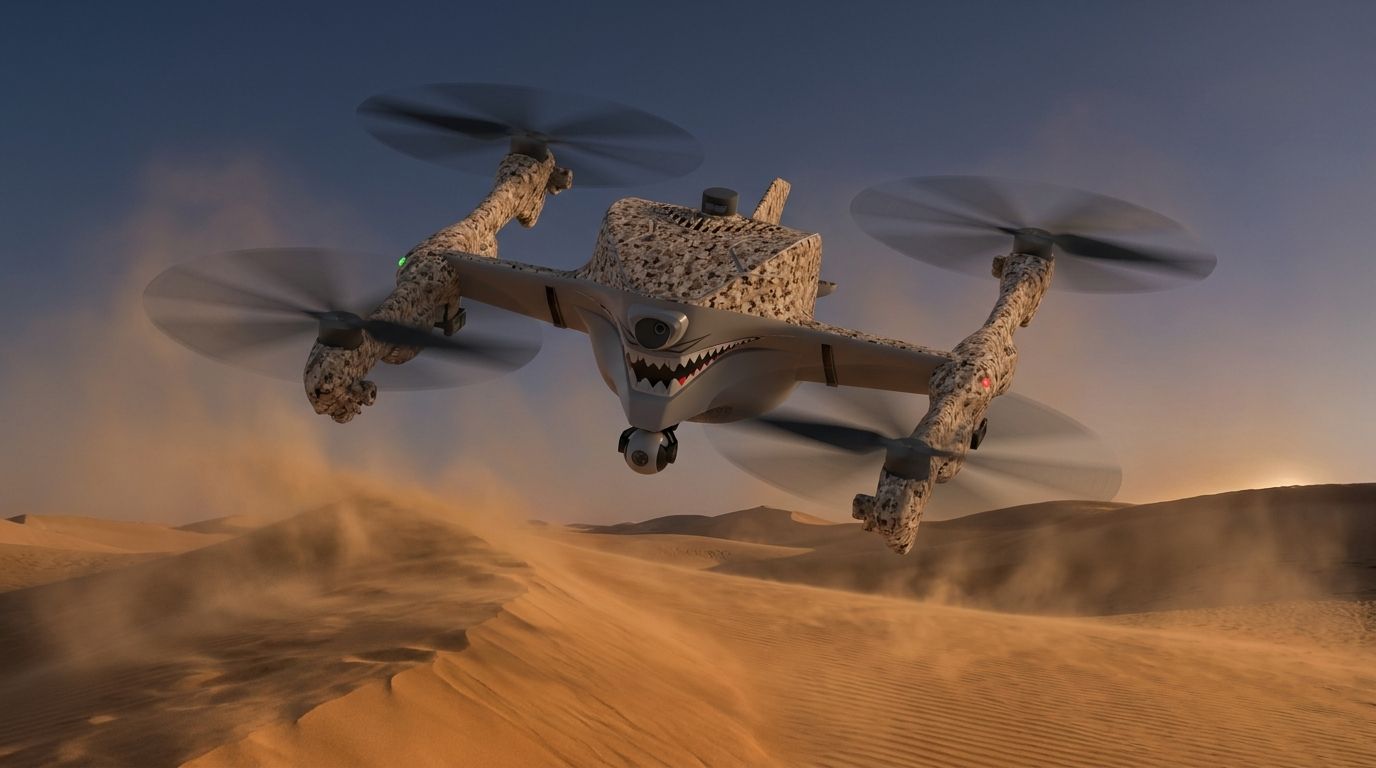
The environmental tolerance is the part that doesn't get enough attention. Carbon-composite airframes handle extreme temperature swings, moisture ingress, and repeated high-stress loading in ways that aluminum and injection-molded plastics simply can't match across a sustained operational tempo.
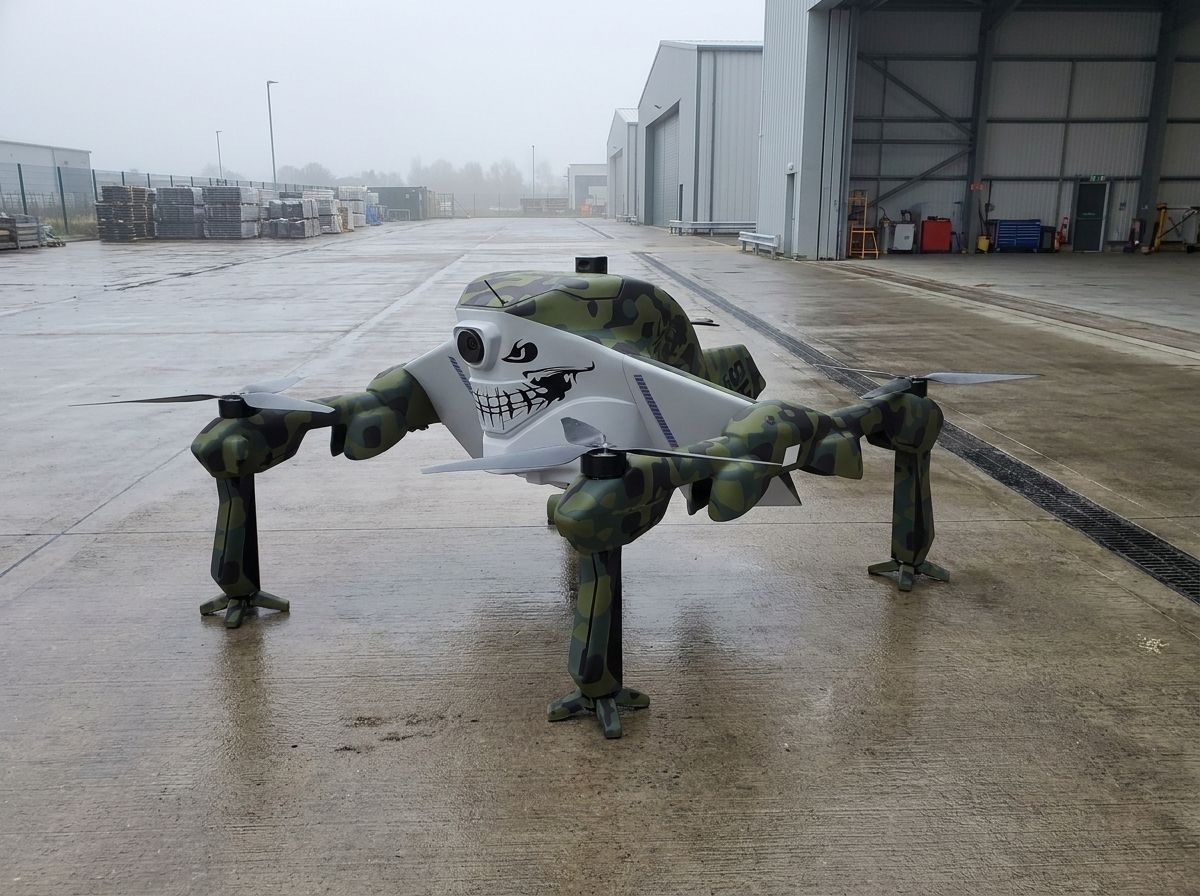
Consider a flood-zone surveillance mission with humid air, debris strikes, and aggressive maneuvering to stay on target as conditions shift below. The airframe has to absorb all of that without degrading between sorties. Carbon-composite structures excel in exactly these scenarios, which is why operators running serious mission profiles keep coming back to them.
Real-world applications of carbon-composite drones
Search and rescue puts the advantage in sharpest relief. Speed matters, payload matters, and the airframe has to hold up across multiple back-to-back sorties without a maintenance window. Carbon-composite construction lets operators carry heavier sensor packages while keeping the platform agile enough to work effectively in confined or turbulent airspace. During Hurricane Harvey response operations in 2017, carbon-composite airframes proved their value precisely here, allowing sustained assessment flights over flooded areas where a heavier or less structurally robust platform would have been grounded.
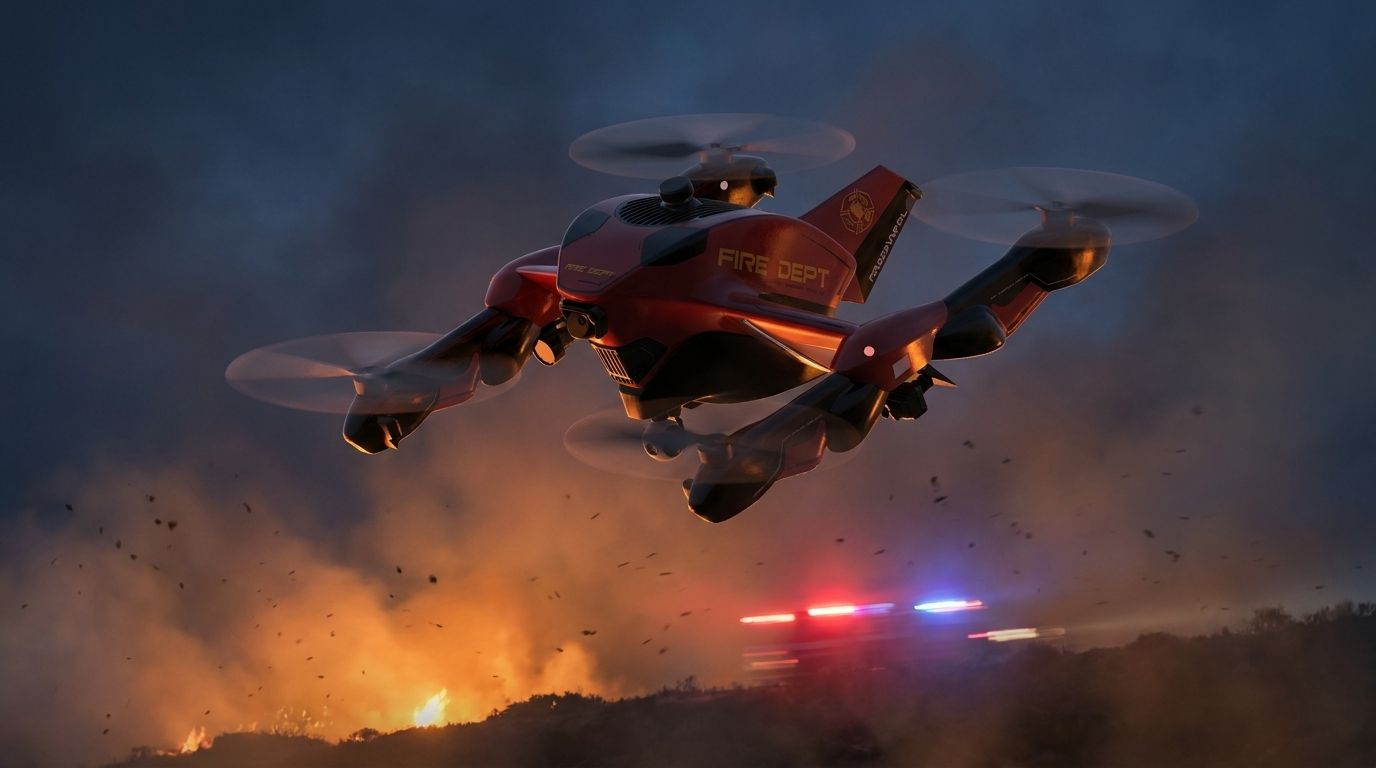
Firefighting is the other proving ground. The 2020 California wildfires put thermal imaging payloads on drones running long sorties in smoke-saturated, high-heat environments. The airframe durability wasn't incidental, it was the enabling condition. Lightweight construction extended time-on-station, and longer time-on-station meant ground crews had the situational data to make better decisions about where to commit resources.
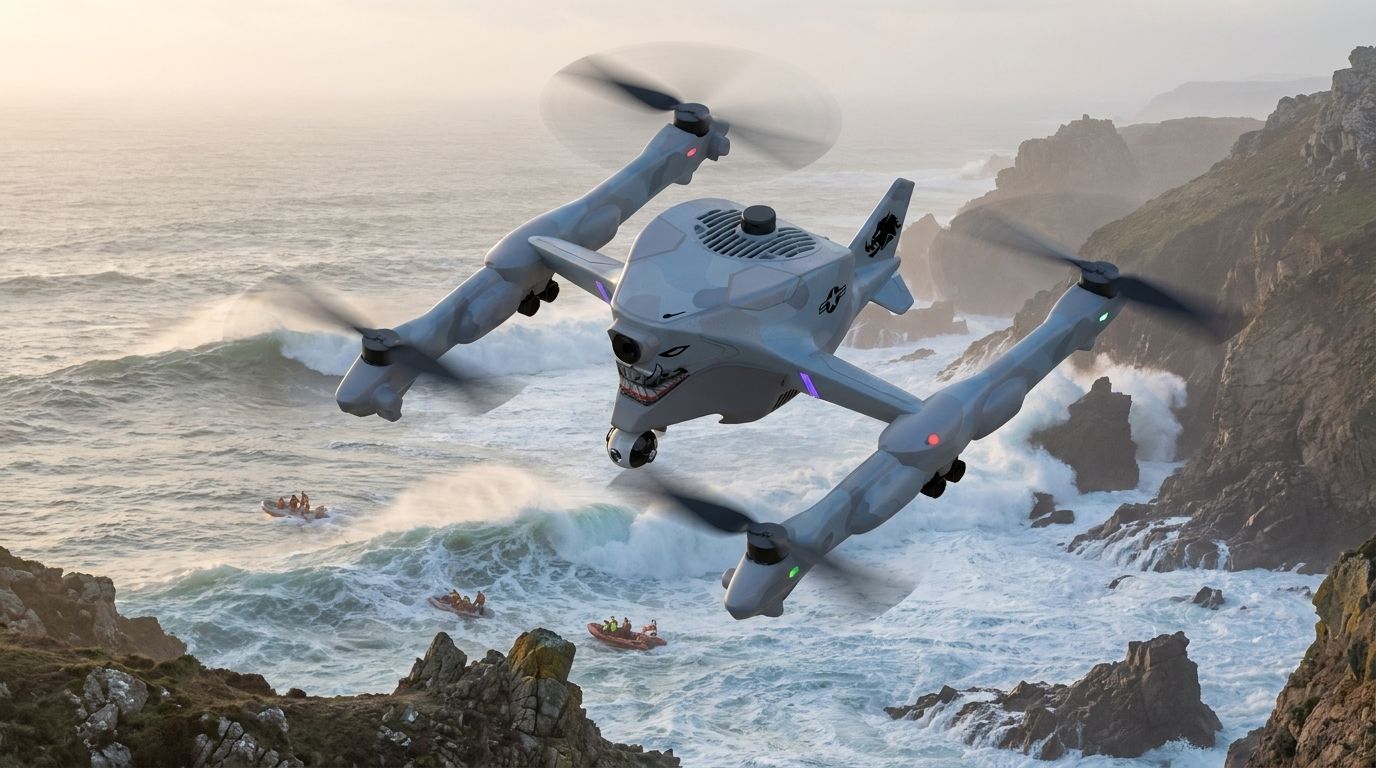
Maritime operations add a different stress profile: saltwater exposure, sustained humidity, and the kind of corrosive loading that destroys conventional airframes over time. Carbon composites resist corrosion in ways metals don't, which is why maritime agencies running coastal search-and-rescue operations have moved toward composite-airframe platforms for sustained patrol and response work.
Engineering audacity: pushing the boundaries
Here's the part most people miss. Switching to carbon composites isn't a material substitution, it's a systems problem. The airframe interacts with aerodynamics, with the powertrain integration, with the sensor payload mount points, with the thermal management envelope. Engineers who treat it as a drop-in replacement miss the compounding advantages available when you redesign around the material's actual properties.
The mistake the industry keeps making is treating airframe weight reduction as its own objective. It isn't. Weight reduction is only valuable as a function of what you do with the margin. Reduce airframe weight by 40 percent and then load that margin back into a heavier sensor suite, and you've built a more capable platform. Reduce it and don't touch the payload, and you've just extended endurance. Both are legitimate, but you have to know which one you're optimizing for before you start designing.
So the deeper lesson is this: Payload Margin is the real product of a carbon-composite airframe. Not lightness. The margin that lightness creates.
Manufacturing process has caught up to the design ambition, too. Automated fiber placement and resin transfer molding have streamlined composite production, enabling more geometrically complex structures with less material waste. That matters for program cost, and it matters for sustainability accounting, which is increasingly part of the procurement calculus for allied-government customers. (And yes, that alignment between performance and sustainability is genuinely useful, not just a talking point.)
Practical takeaways for operators and engineers
- Assess mission requirements first. The airframe material selection should follow from the operational environment, not precede it. Carbon-composite platforms earn their cost premium in high-stress, extended-duration, adverse-environment missions. If the mission profile doesn't stress the airframe, the premium may not be justified.
- Work the payload math explicitly. Understand the weight-to-payload ratio before you spec the sensor fit. A 30-percent airframe weight reduction on a platform in the DJI Matrice 350 RTK class, which carries up to 2.7 kg of payload at up to 55 minutes endurance on a stock build, opens meaningful room for additional sensor capability without touching the endurance budget.
- Push manufacturers on material specifics. Ask for tensile strength data, thermal tolerance ranges, and corrosion resistance specs. Vague answers about "advanced materials" tell you nothing about operational performance. The teams shipping serious composite airframes can answer these questions with numbers.
- Train to the platform's actual envelope. Carbon-composite drones have different handling characteristics than metal-frame equivalents. Simulation exercises that stress the platform's durability advantages in realistic scenarios build the operator confidence needed to use the full capability during a real incident.
FAQ
What are the key benefits of carbon-composite materials in drone manufacturing?
Strength-to-weight ratio is the headline, but the operational benefit is what that ratio enables: longer flight durations, higher payload capacity, and structural resilience in environments that would degrade conventional airframes. Carbon composites tolerate extreme temperatures, sustained moisture exposure, and mechanical stress without the fatigue accumulation that accelerates failure in metal structures. For mission-critical platforms, that translates directly to reduced probability of airframe-driven abort.
How do carbon-composite drones perform in harsh weather conditions?
Composite structures maintain their integrity across the thermal cycling and humidity ranges that stress conventional airframes most. During severe-weather operations, where conventional platforms are often grounded by frame degradation risk, carbon-composite drones have continued operating and delivering actionable data. The structural stability isn't just about surviving the environment, it's about staying on-station long enough to be useful.
Are carbon-composite drones more expensive than traditional options?
The acquisition cost is higher. The lifecycle cost argument is more nuanced. Reduced maintenance frequency, lower probability of stress-fracture failure, and extended operational lifespan across demanding environments compress the cost gap considerably over a realistic program life. For operators running high-tempo missions in adverse conditions, the math tends to favor composites when you run it out past the first 18 months.
How does the use of carbon composites affect drone payload capacity?
Directly. Lighter airframe means more of the gross takeoff weight budget is available for sensors, communications equipment, or additional power. A platform redesigned around a carbon-composite airframe, rather than retrofitted, can carry a thermal imaging camera and a communications relay package where the aluminum equivalent could carry only one. That's the mission-profile difference that matters.
Can carbon-composite drones be repaired easily?
Minor damage, yes. Significant structural damage requires specialized repair techniques, and field repair of composite structures is more demanding than patching aluminum. Leading manufacturers are developing repair kits and documented procedures specific to their composite airframes, which reduces the barrier. But operators should factor composite repair requirements into their maintenance planning from the start, not after the first hard landing.
What industries are adopting carbon-composite drones?
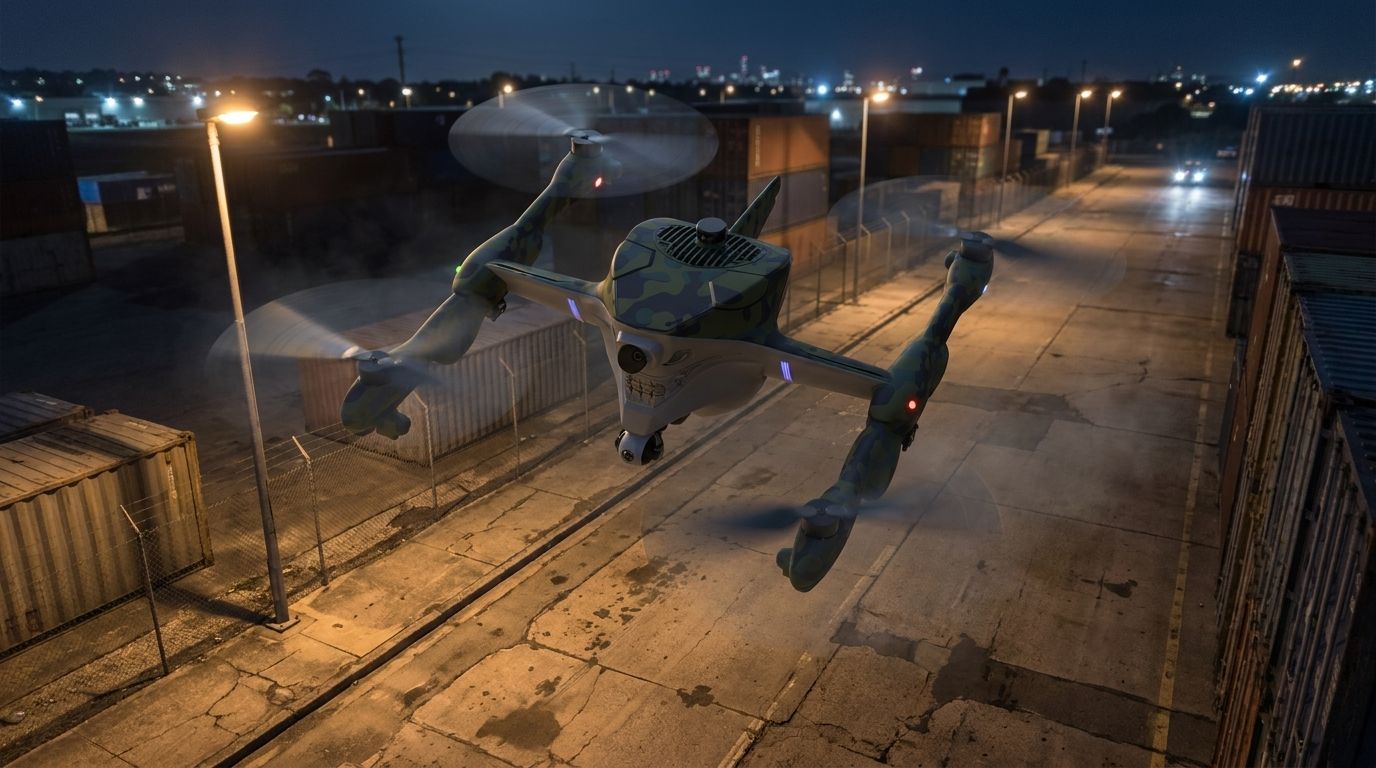
Firefighting, search and rescue, law enforcement, and maritime operations are the clearest early adopters, because those are the environments that stress airframes hardest and most consistently. The pattern the teams shipping composite platforms keep seeing is that adoption accelerates once operators have run a composite platform and a conventional platform through the same high-stress mission cycle side by side. The performance gap isn't theoretical after that.
What we keep seeing in the field is that operators who've worked with carbon-composite platforms stop framing durability as a feature. They start treating it as a baseline requirement, and they evaluate everything else from there.
The moat isn't a lighter airframe. The moat is what the lighter airframe lets the operator carry, and how long it lets them carry it over the work.