

Understanding payload-on-station
A tactical UAV idles silently above a wildfire's moving perimeter, its EO/IR sensor feeding live data to ground teams who are making decisions in minutes, not hours. The airframe's flight time is almost beside the point. What determines mission value is how long that sensor stays on target - a measurement most procurement scorecards still ignore.
That gap is payload-on-station, and it's quietly rewriting how serious program managers evaluate tactical UAV acquisitions.
What payload-on-station actually means
Payload-on-station is the duration a UAV can hold a sensor or effector over a specific location - not merely how long the airframe stays aloft. In dynamic operational environments-wildfire perimeter tracking, post-disaster reconnaissance, forward ISR-the distinction is decisive.
A battery-powered multirotor might log a 30-minute flight time on spec. But swap in a real-world sensor load during an active wildfire operation, factor in the transit to station and the battery change cycle, and effective sensor time can fall below 15 minutes. That's not a capability. That's a gap.
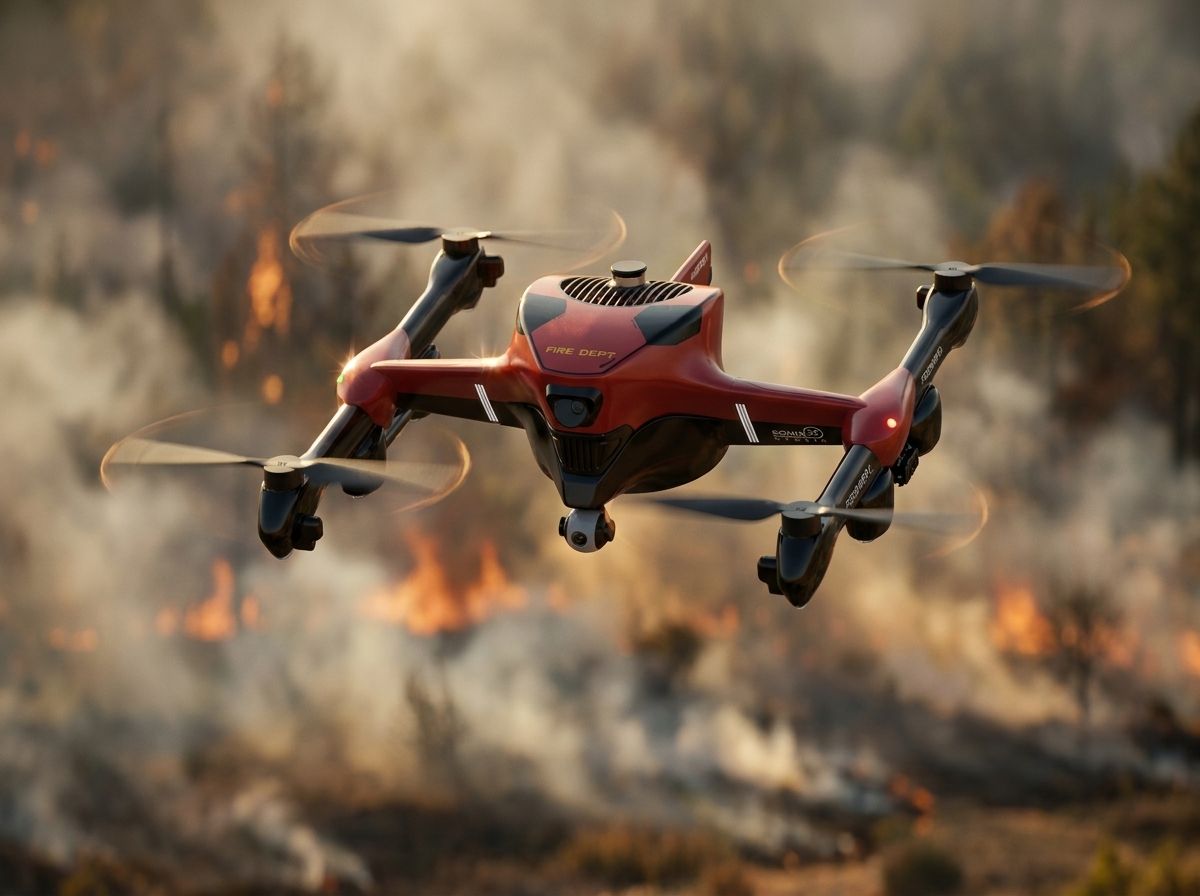
Hybrid-powertrain designs like the Recruit Fire exist specifically to close that gap, extending payload-on-station well beyond what battery-only architectures can sustain.
The limitations of traditional endurance metrics
Airframe endurance numbers are clean, marketable, and often misleading. They describe what the platform can do without a payload, in mild conditions, at optimized throttle. Program managers buying for tactical use don't operate in those conditions.
Consider a search-and-rescue deployment over a collapsed urban structure. A multirotor rated at 30 minutes of flight time might deliver 18 minutes of usable thermal imagery before it has to land and swap batteries-missing the window when a survivor's heat signature is detectable. The spec sheet said 30 minutes. The mission got 18.
That disparity between listed endurance and operational sensor time is exactly why payload-on-station deserves its own line in every procurement RFP.
Examples from the field: real impacts of payload-on-station
- California Wildfires: During the 2023 fire season, hybrid UAVs operating near Lake Tahoe sustained continuous aerial sensor coverage for over two hours against a perimeter that was moving. Conventional multirotors on the same incident managed roughly 30 minutes before requiring battery rotation. Firefighters using the hybrid platforms could track fire movement in real time and reposition suppression resources ahead of the spread-a tactical advantage that 30-minute windows simply don't allow.
- Hurricane Response in Florida: After Hurricane Ian in 2022, UAV teams conducting damage assessment in Fort Myers faced downed power lines, impassable roads, and a patchwork of flooded zones that changed by the hour. Extended payload-on-station let operators hold surveillance over priority areas long enough to give ground teams actionable routing intelligence, rather than snapshots taken between battery swaps.
- Military Reconnaissance in Eastern Europe: During joint exercises in Poland, hybrid UAVs sustained sensor coverage over troop movement corridors and equipment staging areas for extended periods-the kind of persistent ISR that commanders need to plan maneuvers, not just observe them. Short-endurance platforms require more frequent handoffs and introduce coverage gaps that adversaries can exploit.
- Search and Rescue Missions in Urban Environments: A hybrid UAV equipped with a thermal imaging sensor, deployed during an urban search-and-rescue operation in New York City, held its payload on station for upwards of 90 minutes. Rescue teams used continuous thermal imagery to locate individuals trapped under debris-work that demands patience and sustained coverage, not a series of 20-minute sprints.
Why program managers should prioritize payload-on-station
This isn't a technical preference. It's a strategic one. A UAV that holds its sensor over the area of interest longer than any competing platform in the stack becomes the operational anchor for that mission-the single asset generating the continuous data stream that informs every other decision being made on the ground.
Imagine a multi-asset deployment where one platform sustains sensor coverage for 60 minutes while the others rotate out every 20. The long-duration asset isn't just more useful; it becomes the lynchpin. Everything else orbits around its data.
Procurement that prioritizes payload-on-station aligns acquisition decisions with operational reality. It also changes the resource calculus-fewer battery rotations, fewer personnel tied to swap logistics, fewer coverage gaps during the handoff window (and those gaps matter more than most after-action reports acknowledge).
Evaluating UAVs based on payload-on-station
When assessing UAV options, program managers should press manufacturers on specifics:
- What is the effective operational time with the intended payload? Not the airframe maximum-the sensor-active operational window under representative load conditions. Mission planning lives or dies on this number.
- How does the UAV maintain its payload during extended operations? Hybrid power architectures that combine battery and combustion sources can sustain sensor operation well beyond what battery-only designs allow. Ask for the architecture diagram, not just the headline spec.
- What real-world data is available to support endurance claims? Manufacturer datasheets are a starting point. Operational reports from field deployments are the standard. Push for the latter.
- What are the implications of payload-on-station for different mission profiles? A maritime surveillance requirement and a wildfire perimeter-tracking requirement have different sensor types, different loiter altitudes, and different endurance thresholds. The metric has to be evaluated against each specific mission context.
These aren't hostile questions. They're the questions that separate platforms built for procurement brochures from platforms built for operational use.
The future of tactical UAV procurement
The industry is moving-not uniformly, but directionally-toward hybrid architectures that treat sensor endurance as the primary design constraint rather than an afterthought. That shift forces manufacturers to rethink specs, rethink power systems, and rethink what a compelling UAV capability actually looks like to a program manager who has to justify the acquisition to an operational commander.
Payload-on-station becoming a standard procurement metric isn't a prediction. It's a logical consequence of procurement offices getting more sophisticated about what they're actually buying.
Platforms that can demonstrate sustained sensor performance under real operational conditions will define the next generation of tactical UAV procurement. The ones that can't will get filtered out-not by marketing, but by the mission record.
FAQ
What is payload-on-station in UAVs?
Payload-on-station refers to the duration a UAV can maintain a sensor or payload over a specific location, crucial for tactical operations requiring real-time data. This metric is essential for ensuring that operational decisions are based on timely and accurate information.
Why is payload-on-station important compared to flight time?
Flight time only indicates how long a UAV can stay in the air, while payload-on-station measures how effectively it can operate over a scene, which is vital for mission success. A UAV might be airborne for a long duration, but if it cannot provide useful data during that time, its operational value diminishes.
How can I assess a UAV's payload-on-station capabilities?
Look for documentation that specifies operational time with payloads, real-world performance reports, and ask about the UAV's design features that support extended sensor operation. Engaging with manufacturers about their performance metrics can also provide clarity on their capabilities.
What types of missions benefit from payload-on-station metrics?
Missions such as firefighting, search and rescue, military reconnaissance, and disaster response all benefit significantly from extended payload-on-station capabilities. These scenarios require sustained operational periods to gather actionable intelligence.
Are there specific UAV models known for their payload-on-station performance?
Yes, hybrid UAVs like Sonin's Recruit series are designed to maximize payload-on-station, providing significant advantages over traditional battery-only multirotors. Their ability to use both battery and combustion power allows them to sustain operations longer and offer more effective solutions in critical scenarios.
How does payload-on-station impact cost-effectiveness in UAV operations?
Focusing on payload-on-station can enhance cost-effectiveness by reducing the frequency of battery replacements and maximizing the utility of each flight. This results in fewer operational interruptions and better resource management, ultimately leading to savings in both time and money.
What future innovations might enhance payload-on-station capabilities?
Future innovations may include advancements in battery technology, hybrid propulsion systems, and improved sensor integration that allow UAVs to operate efficiently for longer durations. Additionally, AI and machine learning could optimize flight paths and sensor utilization, further extending operational capabilities.
---
Payload-on-station won't stay a niche metric much longer. As procurement offices sharpen their evaluation criteria and operational commanders push back on capability claims that don't survive contact with real missions, the platforms that can demonstrate sustained, sensor-active endurance will separate from the field. For program managers building requirements today, the question isn't whether to include payload-on-station in the evaluation framework. It's why it wasn't there from the beginning.