For years, the drone industry has largely lived with a familiar tradeoff: multirotors bring flexibility, hovering, and tactical access; fixed-wing systems bring serious endurance. The Recruit platform is built around the argument that operators increasingly need more of both.
Drones Are No Longer a Side Story
For years, drones were discussed as useful tools: helpful for photography, mapping, inspection, search-and-rescue, and niche military missions.
That era is over.
Drones are now central to how militaries, governments, first responders, and industrial operators think about the future of airpower. The war in Ukraine has made that impossible to ignore. Small FPV drones, ISR drones, long-range strike drones, fiber-optic drones, autonomous systems, and low-cost attritable aircraft have all moved from the margins to the center of the battlefield conversation.
In a July 2025 Pentagon memo, U.S. Defense Secretary Pete Hegseth called drones “the biggest battlefield innovation in a generation.” That was not marketing language from a startup founder. That was the U.S. defense establishment acknowledging what Ukraine, Russia, Israel, Hezbollah, and other actors have already been demonstrating in real time: unmanned systems are changing the geometry of conflict.
And this is not only a military story.
The same drone revolution is also reshaping public safety, firefighting, border security, disaster response, infrastructure inspection, agriculture, and emergency management. Every sector that needs aerial visibility, faster deployment, safer standoff distance, or better situational awareness is being pulled into the same question:
What kind of unmanned aircraft can actually stay over the mission long enough to matter?
That question is where the market gets interesting. Because the drone industry does not have one endurance problem. It has several.
The Split in the Market: Agile Drones vs. Endurance Drones
Today’s UAV market is full of capable aircraft, but most of them fall into one of two broad categories.
On one side are tactical multirotors: quadcopters, hexacopters, and other rotor-based platforms designed for quick launch, tight maneuvering, hovering, vertical takeoff and landing, and close-range work.
These are the drones that can lift off from a parking lot, a police vehicle, a fire station, a ship deck, a roadway, or a small clearing. They can hover outside a window, inspect a rooftop, follow a street, move between trees, descend into a confined area, or hold position over a scene.
That flexibility is why multirotors have become so important to police departments, fire departments, search-and-rescue teams, tactical units, infrastructure operators, and industrial inspection teams.
But there is a catch.
Most battery-powered multirotors have short mission windows. Some of the best current systems are impressive within their category. Skydio’s X10, for example, lists up to 40 minutes of maximum flight time. DJI’s Matrice 350 RTK lists up to 55 minutes under specified conditions and supports meaningful enterprise payloads.
On the other side of the market are fixed-wing UAVs and fixed-wing VTOL platforms. These aircraft can use wings to generate lift efficiently, which gives them a massive endurance advantage. AeroVironment’s JUMP 20, for example, is a Group 3 fixed-wing VTOL aircraft with an 18.8-foot wingspan, more than 13 hours of endurance, and a 30-pound payload capacity.
Large fixed-wing UAVs can stay in the air for hours. Some can support wide-area ISR, long-range reconnaissance, mapping, maritime surveillance, and extended operations that a small multirotor simply cannot match.
But fixed-wing endurance comes with tradeoffs. Even VTOL fixed-wing aircraft are larger, more complex, less compact, and less naturally suited for tactical close-in maneuvering than multirotors. They are not the aircraft you send between trees, down a street canyon, near a building face, inside a confined industrial site, or into the kind of messy urban or disaster environment where hovering and precise repositioning are essential.
So the market has a gap.
Multirotors have agility but limited endurance. Fixed-wing UAVs have endurance but sacrifice some of the tactical flexibility that makes multirotors so valuable.
Sonin Hybrid is trying to live in that gap.
The Missing Middle
The pitch behind Sonin Hybrid is not that fixed-wing drones are obsolete. They are not.
It is not that battery-powered multirotors are inadequate. They are not.
The better argument is more specific and more interesting:
There is a missing middle in the UAV market — a tactical multirotor that can carry serious mission sensors, operate in confined or complex environments, and remain airborne far longer than battery-only systems typically allow.
That is the thesis behind Sonin Hybrid’s flagship aircraft, the Recruit.
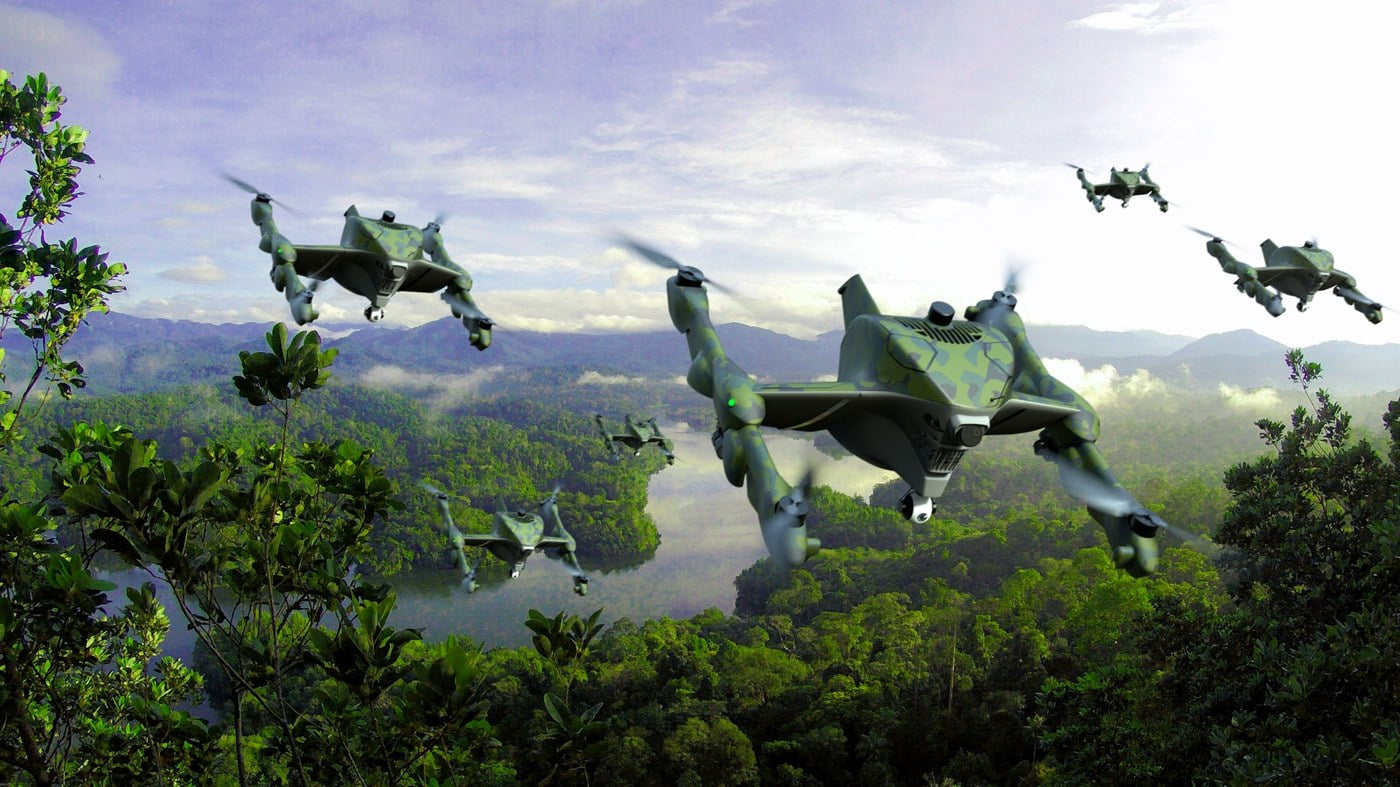
The Recruit is a compact hybrid-powered multirotor UAV platform built around the idea that endurance and maneuverability should not be treated as mutually exclusive. Instead of relying solely on onboard batteries, the aircraft concept uses a fuel-powered engine to drive a generator that supports the electric propulsion and power system.
In plain English: the goal is to keep the multirotor behavior operators want — vertical launch, hover, precise movement, tactical positioning, compact deployment — while using hybrid power to stretch the useful mission window.
This matters because the future of drones is not just about flying farther. It is about staying useful longer.
Why the Recruit Concept Is Timely
The timing around hybrid multirotors is worth paying attention to because defense and public safety users are both moving in the same direction, even if their missions look very different.
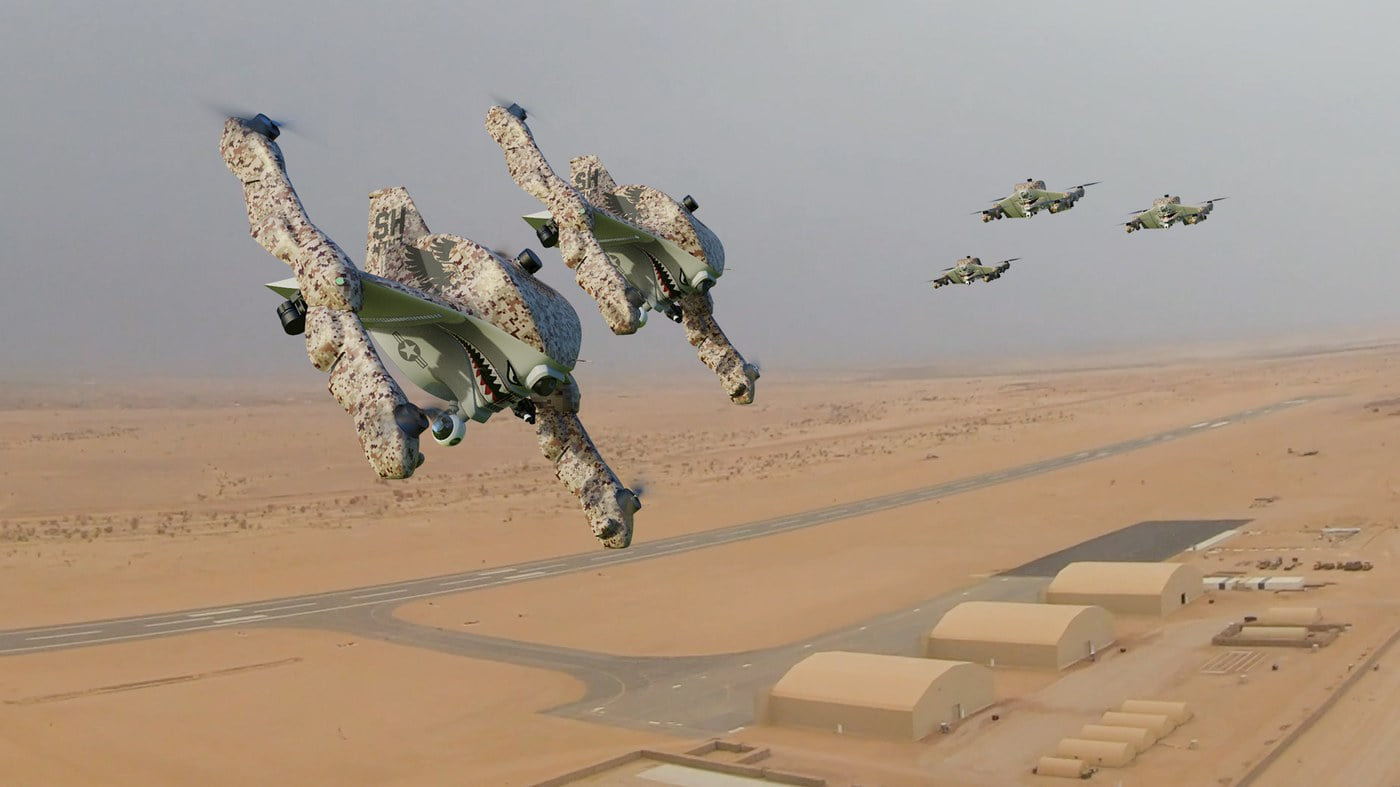
Military leaders increasingly want drones that can deploy quickly, survive contested environments, carry useful payloads, and support ISR or tactical operations without needing large runways, heavy logistics, or exquisite procurement cycles.
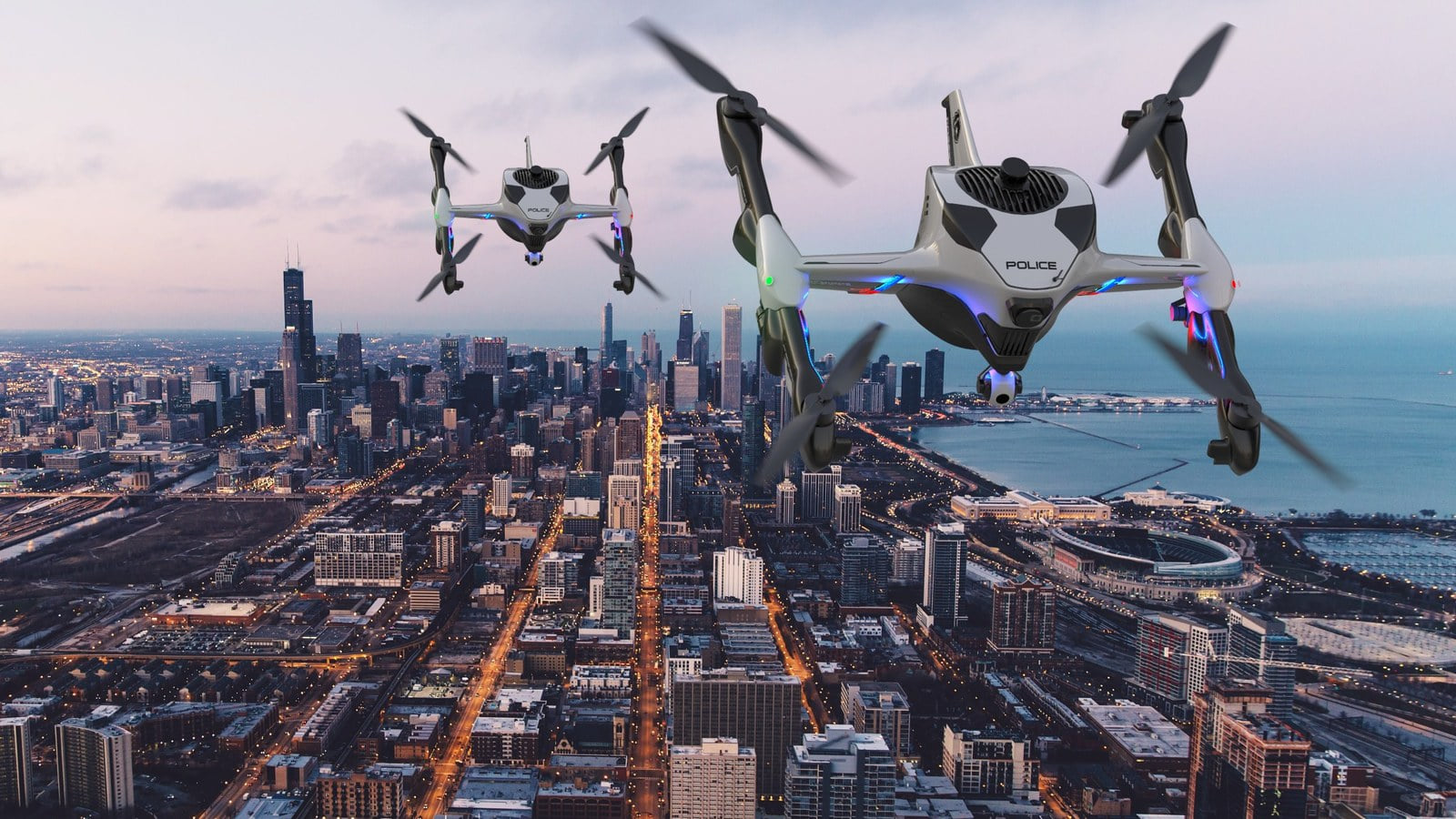
Public safety agencies want drones that can remain over active scenes longer, support command decisions, reduce risk to personnel, and provide persistent situational awareness during incidents that do not fit neatly into a 25-, 35-, or 45-minute flight window.
Emergency managers want better tools for hurricanes, floods, tornadoes, earthquakes, wildfires, chemical incidents, and infrastructure failures.
Industrial operators want aircraft that can inspect more assets per sortie, carry better sensors, and operate around structures where fixed-wing aircraft are not practical.
These are different buyers, but the same constraint keeps showing up:
Useful sensors add weight. Difficult missions take time. Batteries force tradeoffs.
That is why hybrid power keeps reappearing as an attractive idea.
The question has never been whether fuel has more energy density than batteries. It does. The harder question is whether a company can package a hybrid system into a multirotor architecture in a way that is practical, reliable, manufacturable, and operationally valuable.
Sonin Hybrid’s answer is the Recruit.
A Compact Tactical Platform, Not a Giant Fixed-Wing Aircraft
One of the more important details about the Recruit is its intended footprint.
In the UAV world, size affects everything: launch location, transport, field logistics, operator workflow, storage, cost, risk profile, and the kinds of missions the aircraft can realistically perform.
A large fixed-wing UAV with a wingspan approaching 20 feet may be a strong choice for wide-area ISR or long-range missions. But that does not mean it is the best tool for a fire captain, police tactical team, disaster-response crew, infrastructure inspector, or forward unit that needs to deploy from a constrained location.
Sonin Hybrid’s Recruit concept has been positioned around a compact multirotor footprint, roughly in the category of a tactical platform rather than a runway-style aircraft. That compactness is not just a packaging decision. It is central to the use case.
The value proposition is not simply longer flight.
It is longer flight from a drone that can still:
- take off vertically,
- land vertically,
- hover over a point of interest,
- maneuver in tight spaces,
- operate near structures,
- deploy from small staging areas,
- support sensor-heavy missions,
- and remain useful in the messy physical environments where many real missions actually happen.
That is where hybrid multirotors become strategically interesting.
Not because they beat every fixed-wing aircraft on endurance. They probably do not. Not because they replace every battery multirotor. They do not need to. They become interesting because they may give operators a third option.
The Sensor Problem
A drone without useful sensors is just an aircraft.
The mission value usually comes from what the aircraft carries: thermal cameras, high-zoom optics, mapping sensors, ISR packages, communications hardware, environmental sensors, search-and-rescue tools, or specialized payloads from third-party technology providers.
This is where endurance claims often get slippery.
A drone’s empty or lightly loaded flight time may look strong on a spec sheet. But public safety, military, and industrial users rarely care about theoretical endurance in a stripped-down configuration. They care about how long the aircraft can remain useful while carrying the payload required for the job.
That is one of the central promises Sonin Hybrid is making with the Recruit: extended multirotor endurance while carrying a meaningful sensor loadout.
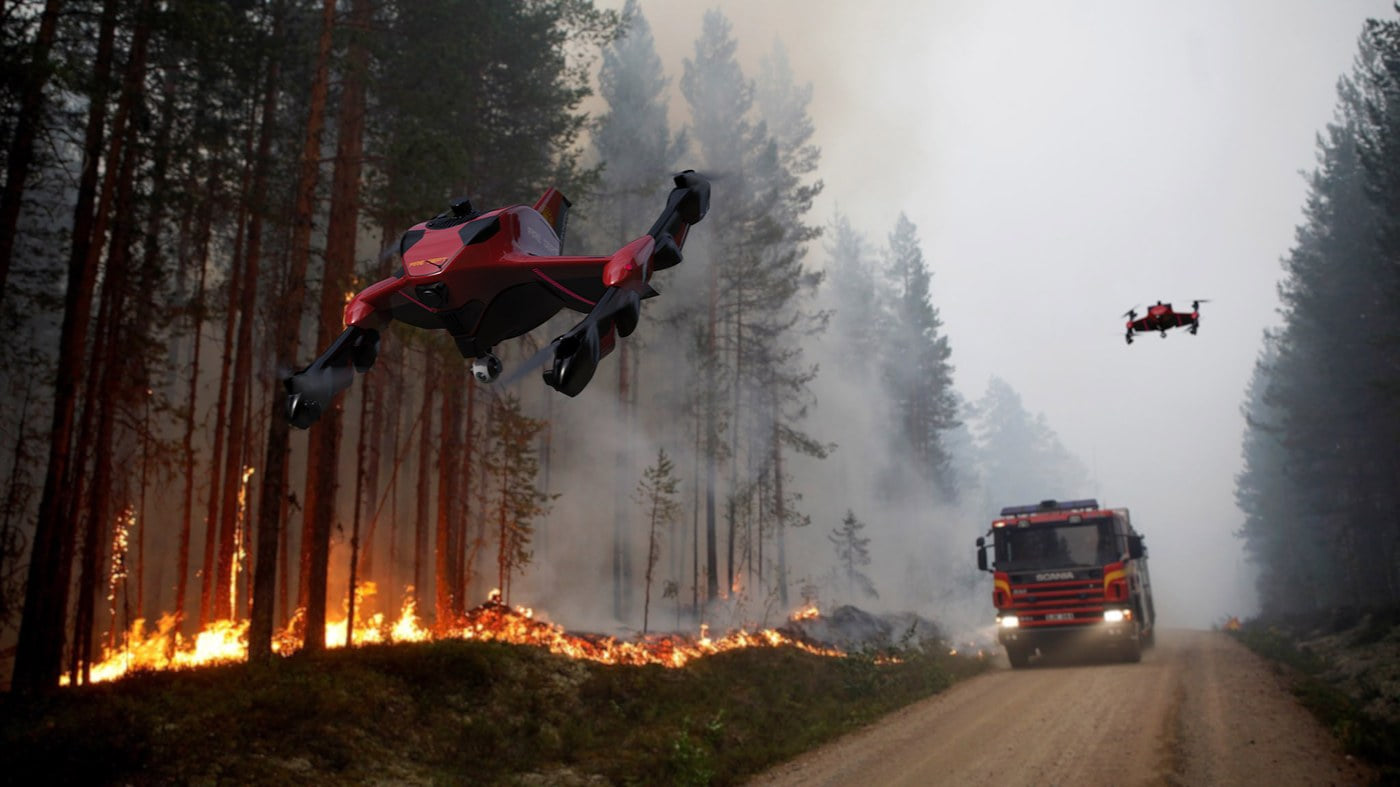
For a police department, that could mean thermal imaging and optical zoom during a search or tactical incident. For a fire department, it could mean persistent overwatch during a wildfire, structure fire, or hazardous materials scene. For FEMA-style disaster response, it could mean damage assessment, route inspection, search support, or communications assistance after a major storm. For defense users, it could mean ISR, route reconnaissance, perimeter overwatch, convoy support, forward observation, or base security. For industrial users, it could mean inspecting power lines, pipelines, bridges, towers, ports, rail corridors, refineries, or other complex assets with fewer interruptions.
This is the less glamorous but more important part of the conversation. The drone market does not just need aircraft that can fly. It needs aircraft that can do useful work for longer periods of time.
Where Sonin Hybrid Fits Against Today’s UAV Categories
To understand Sonin Hybrid’s positioning, it helps to compare the Recruit concept against the rough categories already on the market.
Small tactical multirotors are fast to deploy, easy to transport, agile, and increasingly intelligent. Systems like the Skydio X10 show how much capability can be packed into a small aircraft, especially around autonomy, sensors, and ease of use. But these systems are still constrained by battery endurance.
Enterprise multirotors, including systems like DJI’s Matrice line, can carry more capable payloads and support public safety, inspection, mapping, and industrial missions. But they still live inside the same battery-driven endurance envelope, particularly once payload and environmental factors are considered.
Large fixed-wing and fixed-wing VTOL systems, including platforms like AeroVironment’s JUMP 20, can deliver endurance measured in many hours rather than minutes. But they are larger aircraft, designed for a different operational profile.
Sonin Hybrid’s Recruit is aimed at the space between those categories: a compact tactical multirotor with hybrid-powered endurance and enough payload flexibility to support serious mission systems.
That is a narrow claim, but it is a powerful one. And in emerging markets, narrow claims are often the ones that matter.
The Public Safety Case
Public safety is one of the clearest markets for a hybrid multirotor because the operational need is easy to understand.
Incidents do not care about battery limits.
A missing-person search may stretch across hours. A wildfire can shift direction. A flood can cover neighborhoods. A barricaded suspect can turn a short response into a long standoff. A hazardous materials scene may require continuous monitoring. A collapsed building may need careful aerial assessment before personnel can safely enter.
In these situations, drones give commanders a view they would not otherwise have. But every battery swap is a break in coverage. Every return-to-base moment creates a gap. Every short sortie forces operators to manage the aircraft instead of focusing entirely on the mission.
A longer-endurance multirotor could be especially useful for:
- search and rescue,
- wildfire monitoring,
- fire-scene overwatch,
- flood response,
- tornado or hurricane damage assessment,
- hazardous materials incidents,
- tactical law enforcement support,
- missing-person operations,
- evacuation-route monitoring,
- and command-center situational awareness.
The point is not that a hybrid drone solves every public safety problem. The point is that endurance gives responders more time over the problem. That time can matter.
The Defense and ISR Case
The military case is different, but the logic is similar.
The modern battlefield is becoming more transparent, more sensor-saturated, and more dependent on unmanned systems. Ukraine has shown how quickly low-cost drones can reshape tactics, logistics, reconnaissance, artillery spotting, and strike operations. Recent reports have also highlighted the growing use of fiber-optic FPV drones, AI-assisted systems, and medium-range drone strikes against logistics, air-defense, and command targets.
But not every military drone need is solved by a one-way attack drone or a large fixed-wing ISR aircraft.
There is still a major need for reusable, flexible, payload-capable tactical aircraft that can launch vertically, hover, reposition, carry sensors, and stay available for longer periods.
A hybrid tactical multirotor could support:
- ISR,
- convoy overwatch,
- base and perimeter security,
- route reconnaissance,
- forward observation,
- border and facility monitoring,
- communications relay,
- disaster and humanitarian support,
- port or maritime security,
- and rapid-deploy surveillance.
This is not a theoretical niche. It is the kind of operational middle ground that becomes more important as drones move from experimental tools to standard equipment.
The battlefield lesson from Ukraine is not simply “buy more drones.” The more useful lesson is: buy the right drone for the mission, and assume the mission will keep evolving.
The Strategic Partner Angle
There is another reason Sonin Hybrid may be worth watching: the company may be more valuable as a platform and IP story than as a conventional drone manufacturer trying to scale alone.
Many companies in the UAV ecosystem already have valuable technology. They build sensors, autonomy systems, mapping software, communications tools, thermal imaging payloads, defense electronics, agricultural analytics, or mission-specific hardware. But they may not want to build an aircraft.
That is a real strategic opening.
A sensor company may need a better airframe. A defense contractor may need differentiated UAV IP. A public safety technology company may need a platform that can carry its payload longer. An agricultural technology company may need endurance without giving up low-speed precision. A drone manufacturer may want to move into hybrid systems without starting from zero. An aerospace or manufacturing partner may see value in helping commercialize a patented hybrid UAV architecture before the market fully catches up.
In that context, the Recruit is not just a product. It is a potential carrier for other people’s technology.
That could make Sonin Hybrid relevant to:
- defense contractors,
- public safety technology providers,
- ISR payload companies,
- sensor manufacturers,
- agricultural drone companies,
- infrastructure inspection firms,
- communications and mesh-network providers,
- emergency-response technology companies,
- established UAV manufacturers looking for hybrid capability,
- and commercialization partners with manufacturing, integration, or market-channel strength.
For a small company, that matters. Because the fastest path to impact may not be building a full-stack drone company from scratch. It may be finding the larger partner that already has manufacturing capacity, channels, customers, and integration needs — and giving that partner a differentiated aircraft architecture.
The Hard Part: Hybrid UAVs Are Not Easy
It would be a mistake to pretend this is simple.
Hybrid multirotor UAVs are difficult engineering problems. The same system that gives the aircraft more energy can also introduce weight, vibration, cooling demands, acoustic signature, maintenance concerns, fuel handling, reliability questions, and integration complexity.
That is the honest counterargument.
Battery drones are clean, simple, and increasingly capable. Fixed-wing platforms are efficient for long-range missions. Hybrid multirotors have to justify their added complexity by delivering a major operational advantage.
That is the bar Sonin Hybrid has to clear.
But this is also why the opportunity exists. If the problem were easy, the market would already be crowded with compact, long-endurance hybrid multirotors carrying full mission payloads.
It is not.
The companies that solve hard platform problems early often become strategically valuable before the market fully understands what has happened.
Why the Recruit Could Matter
The Recruit matters because it is pointed at a real and increasingly visible market gap.
The world does not need another vague drone concept. It needs aircraft that solve specific operational problems.
Sonin Hybrid’s argument is that many of the highest-value missions in public safety, defense, disaster response, agriculture, and infrastructure inspection require three things at the same time:
- multirotor flexibility,
- meaningful payload capacity,
- and endurance beyond the normal battery-only window.
That combination is not easy to find.
If Sonin Hybrid can bring its Recruit platform forward with the right manufacturing, engineering, payload, and channel partners, it could occupy a distinctive position in the UAV market: not a toy, not a camera drone, not a giant fixed-wing aircraft, but a compact tactical hybrid multirotor built for serious missions.
That is the core of the story.
Not hype.
A gap.
A technical thesis.
A patented approach.
And a market that is suddenly paying very close attention to drones.
What Comes Next
The next phase for Sonin Hybrid will likely depend less on whether the market believes drones matter. That argument has already been settled.
The more important question is whether the right strategic partners see the same gap Sonin Hybrid sees.
If they do, the Recruit could become more than a single aircraft. It could become a platform for payload companies, public safety users, defense integrators, and industrial operators that need something more capable than a short-duration multirotor but more tactically flexible than a large fixed-wing UAV.
That is the opening.
And in a drone market moving this fast, openings do not stay open forever.