
For decades, “flying cars” lived in the same mental category as robot butlers and cities on Mars. Interesting. Entertaining. Always just over the horizon. That is no longer quite true — but the engineering reality is closer to the drone industry’s endurance problem than the public conversation has caught up to.
The Flying Car Moment Is Real
For decades, “flying cars” lived in the same mental category as robot butlers and cities on Mars.
Interesting. Entertaining. Always just over the horizon.
That is no longer quite true.
The modern flying car industry has a new name: advanced air mobility, or AAM. The aircraft are usually called eVTOLs, short for electric vertical takeoff and landing aircraft. They are not really cars, at least not in the Hollywood sense. Most will not drive down your street, fold out wings, and lift off from a driveway.
But the underlying promise is real enough: aircraft that can take off vertically, fly above ground traffic, carry people or cargo, land close to where they are needed, and operate with less noise, lower emissions, and less infrastructure than conventional helicopters.
That promise has attracted serious money, serious aerospace companies, major airlines, automakers, logistics firms, defense organizations, and city planners.
Joby Aviation, Archer Aviation, Wisk, BETA Technologies, Eve Air Mobility, Honda, Elroy Air, and others have all pushed different versions of this idea forward. Some are focused on passenger air taxis. Some are focused on cargo. Some are focused on autonomous flight. Some are focused on regional mobility. Some are focused on logistics, military resupply, or emergency response.
The hype is real.
But so is the engineering.
And the engineering keeps coming back to one central problem:
Vertical flight takes a lot of power. Batteries are heavy. Payload matters. Safety reserves matter. And range on a slide deck is not the same thing as useful operational endurance.
That is where the flying car conversation starts to get interesting.
It is also where Sonin Hybrid’s technology thesis starts to sound less like a niche drone idea and more like part of a much larger aviation question.
What “Flying Car” Really Means
The phrase “flying car” is useful because people instantly understand it. It is also misleading.
Most of the aircraft being developed today are closer to compact helicopters, tiltrotor aircraft, multicopters, lift-plus-cruise aircraft, or distributed-electric-propulsion aircraft than cars. They are aircraft first. They may use automotive-style manufacturing techniques, battery systems, electric motors, software, and ride-hailing business models, but they are still aircraft.
That distinction matters because aviation is unforgiving.
A car can roll to the shoulder when something goes wrong.
An aircraft cannot.
The FAA has described advanced air mobility aircraft as typically highly automated, electrically powered, vertical-takeoff-and-landing-capable aircraft that may transport cargo and passengers, help with firefighting, and support search-and-rescue operations.
That last part matters.
The public narrative around flying cars has focused heavily on air taxis: quick trips from Manhattan to JFK, Los Angeles to LAX, downtown to an airport, or one side of a traffic-choked city to another. But the more durable market may be broader than that.
Advanced air mobility is not only about wealthy passengers skipping traffic. It is also about:
- medical logistics,
- disaster response,
- emergency evacuation,
- firefighting support,
- regional cargo,
- remote community access,
- military logistics,
- maritime resupply,
- infrastructure support,
- and specialized missions where vertical access matters.
In other words, the aircraft that win may not be the ones with the flashiest renderings. They may be the ones that can do useful work reliably, repeatedly, and with enough range and reserve power to make the economics make sense.
The All-Electric Bet
The first major wave of eVTOL excitement was built around a clean idea:
Electric motors are efficient, quiet, responsive, and mechanically simpler than traditional turbine or piston aircraft systems.
That part is true.
Distributed electric propulsion is genuinely powerful. It allows designers to place multiple motors and propellers around an aircraft, creating redundancy, new control options, and new aircraft shapes. Electric motors can respond quickly. They can be quiet compared with helicopters. They can reduce local emissions. They can simplify some maintenance requirements.
That is the elegant part of the story.
The hard part is the battery.
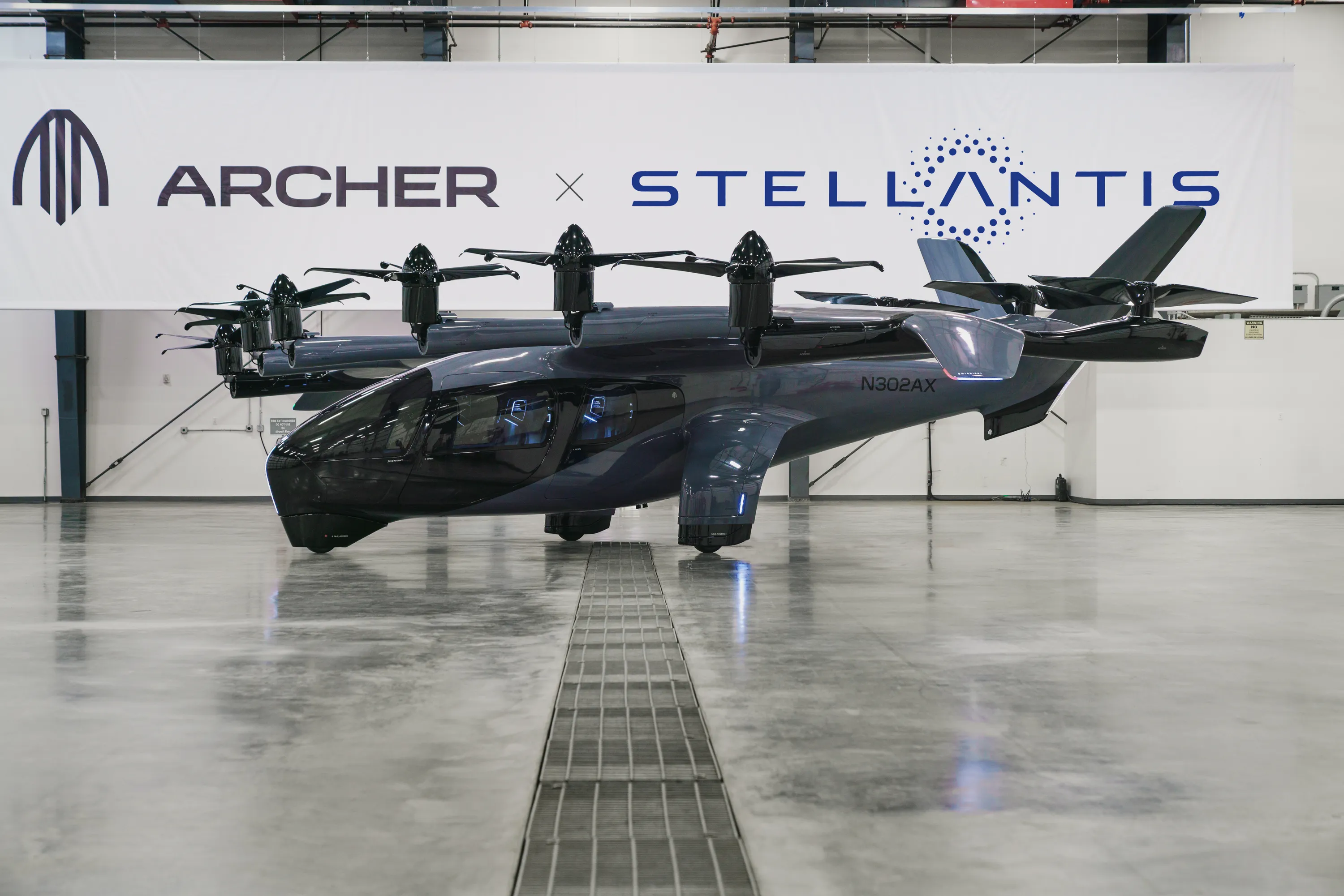
Joby’s aircraft is described as carrying a pilot and four passengers, flying up to 200 mph, with a published maximum range around 100 miles on a single charge in current investor materials. Archer’s Midnight is designed for a pilot and four passengers, speeds up to 150 mph, a range up to 100 miles, and repeated short trips of roughly 20 to 50 miles with rapid charging between flights.
Those are serious numbers from serious companies.
They also reveal the shape of the market.
The early air taxi model is not built around flying hundreds of miles. It is built around short, high-value hops where the aircraft can return to a vertiport, recharge, and do it again.
That may work for specific city routes.
It may work for airport transfers.
It may work for carefully managed networks where trip distance, charging access, weather conditions, passenger load, reserve requirements, and operational tempo can all be tightly controlled.
But it also means the business model is being designed around the battery’s limits.
That is not necessarily bad. It is just important.
The battery is not only a component.
In all-electric AAM, the battery is the aircraft’s range, its payload tradeoff, its recharge schedule, its utilization rate, its infrastructure problem, and a major part of its safety case.
The battery is the business model.
Why Range Is Not the Same as Useful Endurance
Aviation numbers can be slippery.
Range is not endurance.
Maximum range is not typical route length.
Demonstrated test distance is not necessarily certified commercial operating range.
And flight time without meaningful payload is not the same as mission time with passengers, cargo, sensors, reserve requirements, weather margins, and real-world operating constraints.
This matters even more in vertical aircraft.
A vertical takeoff consumes a lot of power. Hover consumes a lot of power. Landing still requires enough power available at the end of the flight, not just at the beginning. Regulators, operators, and passengers will not accept aircraft that cut energy margins too closely.
So the real question is not merely:
How far can it fly?
The better question is:
How far can it fly while carrying the required payload, preserving reserve power, meeting safety requirements, handling weather and routing constraints, and still operating often enough to justify the cost of the aircraft and infrastructure?
That is a much harder question.
It is also the question that separates hype from aviation.
The eVTOL industry has already learned this the hard way. Some companies have made real progress. Others have struggled with certification timelines, capital intensity, battery constraints, and the brutal cost of turning a futuristic aircraft concept into a certified, manufacturable, supportable aviation product.
Volocopter filed for insolvency in late 2024 before later being acquired. Lilium also entered insolvency proceedings after failing to secure enough funding to keep its program moving. Those outcomes do not mean advanced air mobility is dead.
They mean aviation is hard.
And any propulsion strategy that reduces operational constraints deserves a closer look.
Hybrid Power Keeps Coming Back for a Reason
The flying car industry likes the word electric.
Investors like it. Cities like it. Passengers like it. Marketing teams definitely like it.
But the word “electric” can hide an important distinction.
An aircraft can use electric propulsion without being powered only by batteries.
That is the opening for hybrid-electric systems.
In a hybrid-electric architecture, electric motors can still drive the propellers or rotors. The aircraft can still benefit from distributed electric propulsion. It can still use batteries for peak power, redundancy, and transient loads. But a fuel-powered engine, turbine, generator, or other onboard energy source can help sustain the electrical system, extend range, recharge batteries in flight, or support payload power.
That may not sound as clean as the all-electric narrative.
But it may be more operationally flexible.
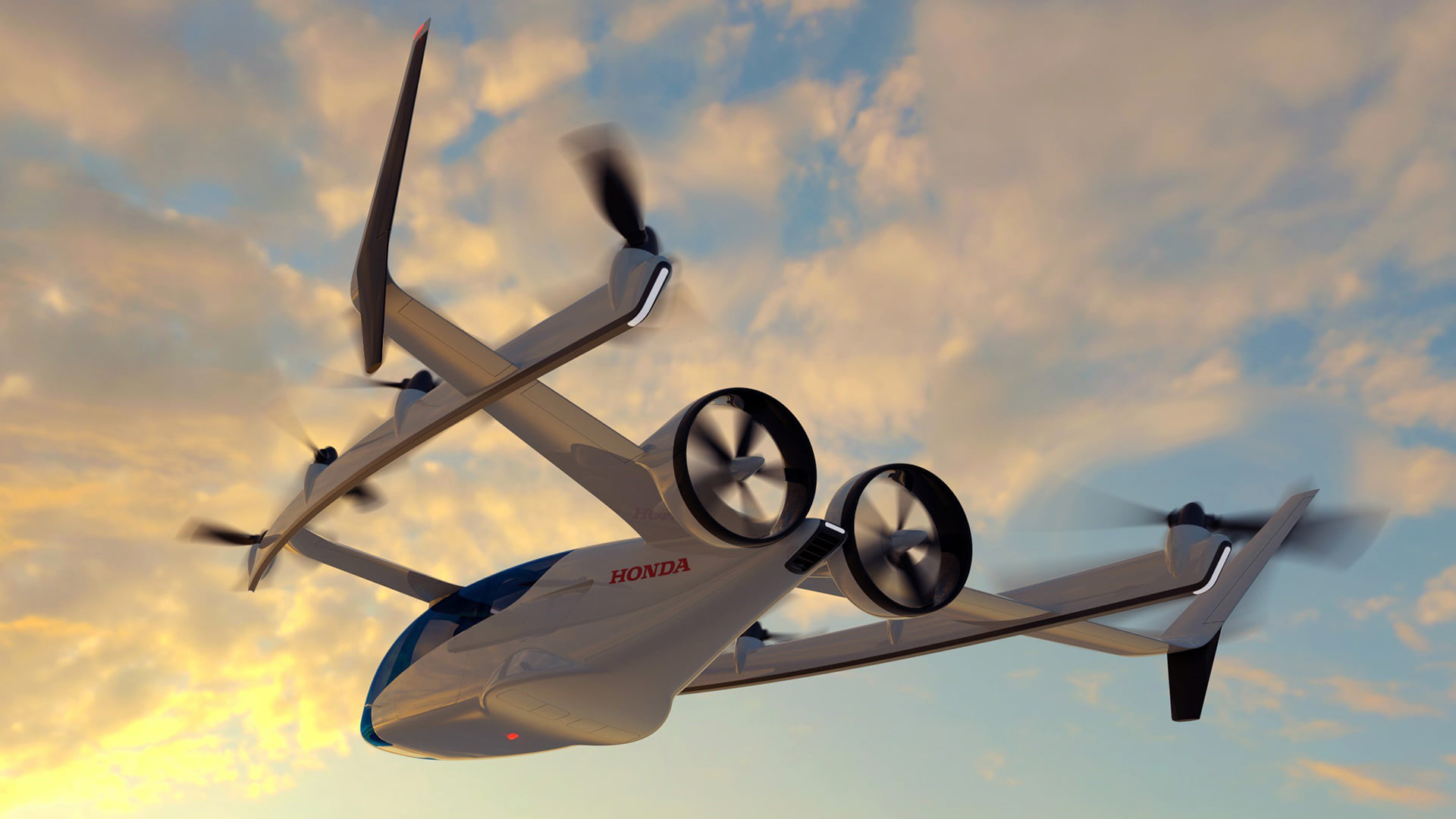
Honda has been unusually direct about this. In its own eVTOL materials, Honda says most all-electric eVTOLs are aimed at short-distance flights of roughly 100 kilometers, while its gas-turbine hybrid eVTOL concept targets about 400 kilometers of range.
That is not a minor difference.
That is the difference between an intra-city shuttle and a potential inter-city aircraft.
Elroy Air’s Chaparral cargo aircraft makes a similar point from a different angle. The Chaparral is a hybrid-electric VTOL cargo UAS designed to carry substantial cargo over hundreds of miles without needing runway infrastructure. Its value proposition is not “look, a flying taxi.” It is more practical: move cargo between flexible locations with minimal infrastructure.
That may be where hybrid-electric AAM gets its first real traction.
Not necessarily in passenger air taxis.
Not necessarily in consumer-facing flying cars.
But in cargo, logistics, defense, emergency response, public safety, and regional missions where the question is brutally simple:
Can the aircraft do the job without asking the operator to build a perfect charging network first?
The Infrastructure Problem Nobody Can Ignore
All-electric aircraft do not only need batteries.
They need charging infrastructure.
They need grid capacity.
They need turnaround procedures.
They need thermal management.
They need battery health monitoring.
They need enough chargers in the right places.
They need downtime that does not destroy aircraft utilization.
For a small number of airport shuttle routes, that infrastructure may be manageable. A carefully planned network can put chargers where aircraft need to land. That is why early air taxi companies are focused on short routes, repeatable corridors, and controlled operating environments.
But once the mission moves outside that controlled network, the problem changes.
A disaster zone may not have grid power.
A military forward location may not have charging infrastructure.
A wildfire staging area may move.
A rural medical logistics route may not have a vertiport at the other end.
An island, remote village, construction site, port, mine, oilfield, or emergency operations area may need air access before it has electric aviation infrastructure.
This is where hybrid systems become strategically interesting.
Fuel is not perfect. It has emissions, logistics, cost, and maintenance implications.
But fuel is dense, portable, familiar, and operationally flexible.
A hybrid-electric aircraft can potentially keep many of the benefits of electric propulsion while reducing dependence on charging infrastructure at every landing site.
That does not make hybrid the answer for every mission. It makes hybrid a serious answer for missions where endurance, infrastructure independence, and payload power matter more than a perfectly clean marketing story.
The Sonin Hybrid Connection
Sonin Hybrid’s current flagship platform, the Recruit, is not a passenger air taxi. That should be said clearly.
The Recruit is a hybrid-powered multirotor UAV concept focused on public safety, ISR, disaster response, agriculture, infrastructure, and tactical missions where endurance, maneuverability, and payload capacity all matter.
But the underlying problem Sonin is addressing is closely related to the problem facing the flying car industry.
Both markets are wrestling with the same set of tradeoffs:
- vertical takeoff requires high power,
- hover and low-speed maneuvering are energy-intensive,
- batteries impose weight and endurance constraints,
- useful payload reduces mission time,
- reserve power matters,
- infrastructure matters,
- and real-world operations are messier than concept renderings.
Sonin Hybrid’s central thesis is that hybrid power can extend the usefulness of multirotor aircraft without giving up the core advantages that make vertical aircraft valuable in the first place.
For Recruit, that means a compact tactical UAV that can hover, maneuver, carry sensors, and remain useful longer than typical battery-only multirotors.
For the broader AAM market, the same thesis points toward a larger question:
Could hybrid-electric architecture become one of the bridges between today’s battery-limited eVTOL concepts and tomorrow’s more mature advanced air mobility networks?
That is the interesting part.
Not because Sonin Hybrid needs to become an air taxi company. It does not.
But because propulsion architecture is one of the hardest problems in vertical aviation, and Sonin’s work sits directly in that conversation.
The First Winning Markets May Not Be Air Taxis
The public has been sold a simple version of advanced air mobility:
Open an app. Book an air taxi. Fly over traffic. Land near your destination.
That may happen in some places.
But the first durable markets may be less glamorous and more useful.
- Cargo.
- Medical logistics.
- Disaster response.
- Defense resupply.
- Remote infrastructure support.
- Wildfire response.
- Search and rescue.
- Maritime operations.
- Island and rural connectivity.
These missions do not need the same kind of consumer adoption curve as urban air taxis. They do not need to persuade commuters to change habits on day one. They do not need to solve every vertiport politics problem immediately. They can begin where the value of vertical access is already obvious.
A medical logistics operator does not need the aircraft to be trendy.
A disaster-response team does not need the aircraft to feel futuristic.
A military logistics unit does not need a flying-car brand story.
They need aircraft that can move useful payloads, operate from flexible locations, stay airborne long enough, and work when the infrastructure is imperfect.
That is why hybrid-electric aircraft may find their earliest traction outside the glossy air taxi narrative.
And that is also why Sonin Hybrid’s technology story matters.
The same endurance logic that applies to a tactical UAV can also apply to larger vertical aircraft categories where payload, range, and infrastructure independence become decisive.
The Air Taxi Industry Is Learning What Drone Operators Already Know
Drone operators have lived with battery limits for years.
They know the ritual.
Charge batteries. Swap batteries. Monitor voltage. Watch payload weight. Watch wind. Watch temperature. Bring the aircraft home early. Keep reserves. Plan around endurance.
The air taxi industry is now running into a more expensive version of the same problem.
A small drone returning early is inconvenient.
A passenger aircraft returning early is a business model problem.
A drone battery swap takes a few minutes.
An air taxi charging network requires capital, real estate, grid capacity, certification, procedures, safety systems, and public acceptance.
A drone with reduced payload is annoying.
A passenger eVTOL with reduced payload may mean fewer passengers, less luggage, shorter route options, or lower revenue per flight.
The physics scale up. So do the consequences.
That is why the flying car story should not only be judged by whether an aircraft can hover beautifully in a demonstration video. The better test is whether the aircraft can operate repeatedly, safely, economically, and with enough energy margin to handle real-world operations.
That is where hybrid power may become less of a compromise and more of a practical bridge.
The Case for a Hybrid Bridge
All-electric aviation has a future. That should not be dismissed.
Battery technology will improve. Charging networks will expand. Regulations will mature. Some routes will be perfect for short-range all-electric aircraft. Quiet airport shuttles and dense urban corridors may be exactly where battery eVTOLs first prove themselves.
But the industry may be making a mistake if it treats all-electric as the only acceptable path.
A hybrid bridge could accelerate useful deployment in the sectors that need vertical aircraft before battery technology and infrastructure fully mature.
That bridge could support:
- longer range,
- faster field turnaround through refueling,
- reduced dependence on charging infrastructure,
- better reserve margins,
- more payload flexibility,
- onboard power for mission systems,
- and operations in remote, tactical, or disaster-affected locations.
This is not an argument against electric propulsion.
It is an argument against pretending batteries alone are always enough.
Hybrid-electric systems may allow the aviation industry to keep the parts of electric propulsion that matter — distributed motors, precise control, redundancy, lower noise profiles, and flexible aircraft layouts — while using a denser onboard energy source to solve the endurance problem.
That is a very different story from the simple flying-car fantasy. It is also a more serious one.
Where Sonin Hybrid Could Fit
Sonin Hybrid does not need to compete directly with Joby, Archer, Wisk, Honda, BETA, Eve, or other passenger eVTOL developers to be relevant to the advanced air mobility conversation.
Its relevance may sit in the technology layer beneath the headline market.
The company’s hybrid multirotor work could be interesting to organizations thinking about:
- hybrid-electric UAV platforms,
- cargo VTOL aircraft,
- public safety aviation,
- emergency-response drones,
- unmanned logistics aircraft,
- military resupply platforms,
- long-endurance sensor carriers,
- distributed electric propulsion,
- and larger aircraft concepts that need vertical lift plus better endurance.
That matters because advanced air mobility will not be one market.
It will be a stack of markets.
Passenger air taxis will be one layer.
Cargo will be another.
Defense logistics will be another.
Emergency response will be another.
Infrastructure and industrial aviation will be another.
Rural and regional mobility may become another.
Sonin Hybrid’s Recruit platform sits at the UAV end of that stack today. But its propulsion thesis points toward the same structural issue that larger AAM aircraft face: vertical flight needs more usable energy than batteries can comfortably provide in many real-world missions.
That creates a strategic opening.
Not necessarily to become the next air taxi brand.
But to become part of the technology conversation around how vertical aircraft can fly longer, carry more, and operate from less-than-perfect infrastructure.
The Strategic Partner Angle
This is where the business case gets interesting.
Many companies in advanced air mobility are focused on passenger certification, fleet operations, vertiport networks, autonomy, airspace management, manufacturing, or customer channels.
Other companies specialize in sensors, batteries, motors, controllers, logistics software, defense systems, emergency-response tools, or cargo payloads.
Not all of them want to build a hybrid multirotor architecture from scratch.
That is the opening for Sonin Hybrid.
The right partner may not be a flying car company looking for a finished aircraft.
It may be:
- a defense contractor studying hybrid-electric vertical lift,
- a logistics company interested in unmanned cargo aircraft,
- a public safety technology company that needs a longer-endurance aerial platform,
- a sensor company that needs more payload power and mission time,
- an aerospace manufacturer exploring hybrid propulsion,
- a UAV company looking to expand beyond battery-only systems,
- or an advanced air mobility player that sees hybrid-electric systems as a necessary parallel path.
For Sonin Hybrid, the point is not to chase the flying car hype.
The point is to show that the same endurance problem now challenging eVTOL developers is the problem Sonin has been working on for years in the multirotor UAV space.
That makes the company’s technology more relevant, not less.
The Hard Part: Hybrid Is Not Magic
Hybrid power is not a free lunch.
It adds machinery.
It adds fuel.
It adds heat.
It adds vibration.
It adds maintenance questions.
It adds certification complexity.
It can introduce acoustic and emissions issues that all-electric aircraft are specifically trying to avoid.
Those are real tradeoffs.
Any serious hybrid aircraft company has to face them directly.
But every propulsion path has tradeoffs.
Battery-only aircraft trade simplicity and clean operation for range, payload, charging, and utilization constraints.
Conventional helicopters trade proven capability for noise, operating cost, emissions, complexity, and infrastructure limitations.
Fixed-wing aircraft trade efficiency for runway or launch-and-recovery needs, depending on the platform.
Hybrid-electric aircraft trade system complexity for endurance, range, and infrastructure flexibility.
The question is not which technology is perfect. None of them are.
The question is which compromise fits the mission.
For short urban hops inside well-funded vertiport networks, battery eVTOLs may make sense.
For long-range wide-area missions, fixed-wing platforms may make sense.
For flexible vertical missions where endurance, payload, and infrastructure independence matter, hybrid-electric aircraft deserve a serious look.
That is the lane where Sonin Hybrid’s work becomes relevant.
The Real Future May Be Less Flashy and More Useful
The flying car dream sells a beautiful image:
Glass towers. Quiet aircraft. No traffic. A city that suddenly has a third dimension.
That future may arrive in pieces.
But the more important future may look different.
A hybrid unmanned aircraft carrying medical supplies after a hurricane.
A long-endurance multirotor supporting wildfire crews beyond the normal battery window.
A cargo VTOL moving parts to a remote industrial site.
A defense logistics aircraft resupplying a forward unit without a runway.
A public safety drone staying over a search area long enough to make a difference.
A vertical aircraft that does not need every landing zone to be a fully built-out charging node.
That version of the future is less glamorous.
It may also be more valuable.
And it is much closer to the problem Sonin Hybrid is already trying to solve.
Why This Matters Now
Advanced air mobility is entering a more serious phase.
The first phase was imagination.
The second phase was capital.
The third phase is certification, infrastructure, operations, and survival.
That third phase is where physics gets a vote.
Battery-only eVTOLs may succeed in carefully chosen markets. Hybrid-electric systems may succeed in different ones. Hydrogen may eventually matter. Conventional aircraft will not disappear. The future will probably be mixed, not pure.
But one thing is becoming clear:
Vertical aircraft that can carry useful payloads, operate from flexible locations, preserve safety margins, and remain airborne long enough to justify their mission will be strategically valuable.
That is the deeper flying car story.
Not the fantasy of everyone owning a personal sky commuter.
The real story is the emergence of new vertical aircraft categories, each fighting the same basic tradeoff between power, payload, range, infrastructure, and cost.
Sonin Hybrid’s Recruit platform lives on the UAV side of that transition. But its hybrid power thesis touches a much larger aviation question.
The industry keeps asking how to make vertical flight more useful.
Sonin Hybrid’s answer is simple:
Do not give up the advantages of electric propulsion.
Do not pretend batteries solve every mission.
Use hybrid power where endurance, payload, and operational flexibility matter.
That may not be the cleanest slogan in advanced air mobility.
But it may be one of the more practical ones.